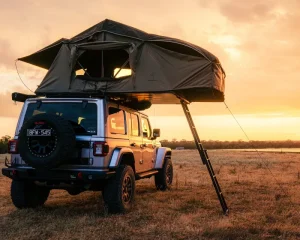
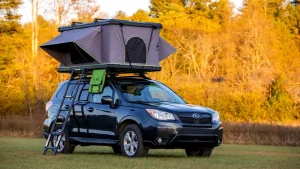
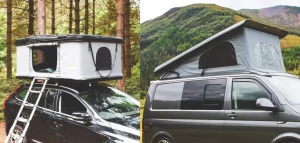
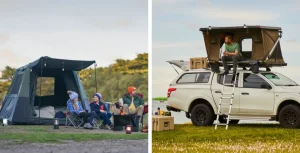
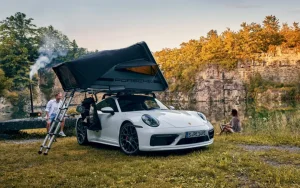
With the growing popularity of outdoor camping and self-driving trips, ultralight roof tents have become the first choice for many camping enthusiasts. Due to its convenience and comfort, roof tents are widely used not only for short trips but are also becoming ideal for long trips.
There are two main types of ultralight roof tents: soft-shell and hard-shell. They have their own advantages and disadvantages and are suitable for different needs and scenarios. In this article, we will compare these two types of ultralight roof tents from multiple dimensions to help you make the most suitable choice.
Soft-shell roof tent: lightweight and flexible, suitable for versatile scenarios
Advantages
- Lightweight, suitable for small cars:The soft-shell tent among the ultralight roof tents usually adopts aluminum alloy frames and high-strength fabrics, with a lighter overall weight, which is suitable for mounting on small SUVs or sedans. For those campers who are concerned about the lightness of roof tents, soft-shell roof tents are an ideal choice.
- Fast unfolding for quick setup:Softshell roof tents unfold in a variety of ways, such as zippers, pop-ups, etc., making them easy to operate and suitable for campers who move around a lot. The fast unfolding time makes it ideal for short-distance camping or urgent setup.
- Relatively affordable:Compared to hard-shell roof tents, soft-shell ultralight roof tents are less expensive to manufacture, with market prices usually ranging from $600 to $1,200, making them suitable for users with limited budgets.
Disadvantages
- Poor wind resistance:Due to the light structure of the soft shell roof tent, it is less stable in windy weather, and you need to pay attention to choosing a suitable setting environment when using it.
- Average insulation:Soft shell roof tents have weak insulation properties and may feel uncomfortable when used in cold weather, so additional insulation measures are needed.
Hard-shell roof tents: sturdy and durable for long journeys
Benefits
- Sturdy structure and strong wind resistance:Hard-shell ultralight roof tents are made of sturdy shell materials such as ABS or aluminum alloy, which have superior wind resistance and are suitable for all kinds of adverse weather conditions. For campers who need to deal with high winds and extreme weather, hard shell roof tents are a better choice.
- GOOD INSULATION PERFORMANCE:The outer shell of the hardshell roof tent has better insulation performance, which can provide better warmth, especially outstanding in winter camping.
- More interior space:Hardshell ultralight roof tents are usually more spacious inside when unfolded, making them suitable for multiple people or families.
Disadvantages
- Heavier weight, needs to be carried by a larger vehicle:Hardshell roof tents usually weigh between 110 and 155 pounds (50 and 70 kilograms) and are suitable for carrying on large SUVs or pickup trucks, making them unsuitable for smaller vehicles.
- Takes longer to unfold:Although modern hard-shell roof tents are equipped with aids such as air struts, they still require some time and physical effort to unfold and stow. Compared to soft-shell roof tents, hard-shell tents are slower to deploy.
- Higher price:Hard-shell roof tents are more expensive to manufacture and usually cost between $1,200 and $2,000 on the market, making this type more suitable for those with higher budgets.
Softshell vs. Hardshell Roof Tent Comparison Table
Characteristics | Softshell Roof Tent | Hardshell Roof Tent |
Weight | Lighter, suitable for small cars | Heavier, suitable for large SUVs or pickup trucks |
Deployment speed | Fast, suitable for frequent movement | Slower, requires some time and effort |
Wind resistance | Fair, need to pay attention to the setting up environment | Strong, suitable for harsh weather conditions |
Insulation | Fair, need extra insulation in winter | Good, suitable for winter camping |
Interior space | Smaller, suitable for 2-3 people | Spacious, suitable for multiple people or families |
Price | $600-$1200 | $1200-$2000 |
How to choose the right ultralight roof tent?
Choosing the right ultralight roof tent requires comprehensive consideration based on your personal needs, budget, vehicle situation, and camping needs. Below we will go through a few specific usage scenarios to help you make a clearer choice.
- Limited budget and small vehicle: choose a softshell ultralight roof tent
- Budget Constraints:If your budget is between $600 and $1200, a softshell roof tent is an ideal choice. It’s more affordable than a hard-shell tent and offers better value for money.
- Applicable Vehicles:Soft-shell roof tents are lightweight, usually between 35 and 55 kilograms, making them ideal for small cars, SUVs, or sedans. It does not take up too much roof carrying capacity, suitable for carrying lighter vehicles.
- Scenarios:Soft-shell roof tents take very little time to set up, usually just a few minutes, making them ideal for short trips, weekend camping trips, or frequent occasions when a quick setup is needed.
- Benefits:Due to its lightweight, easy portability, and quick setup, it is suitable for campers who like to travel flexibly and don’t mind sacrificing some comfort or wind resistance.
- Example:For example, one of 171Outdoor’s soft-shell roof tents weighs 45 kg and fits most mid-sized SUVs. It unfolds in 3-5 minutes, making it perfectly suited for quick set-up and movement.
- Focus on comfort and wind resistance: choose a hardshell ultralight roof tent
- Higher budget:Hardshell roof tents usually cost between $1,200 and $2,000. If you are willing to pay extra for better comfort and wind resistance, a hard shell tent is a very suitable choice.
- Suitable Vehicles:Hard shell roof tents are generally heavier, usually between 50 and 70 kilograms, making it suitable for carrying on larger vehicles such as medium to large SUVs and pickup trucks. This type of tent requires a stronger roof carrying capacity.
- Applicable Scenarios:Hard-shell roof tents are more stable and have better wind resistance and insulation than soft-shell tents, so they are perfect for long-distance traveling, cold weather, and extreme climates. If you plan to go to mountainous areas, seaside, and other windy areas, a hard-shell roof tent is definitely a better choice.
- Pros:Hardshell tents offer more space when unfolded, usually accommodating two to four people, and can withstand stronger winds due to their sturdy construction. It’s also very well insulated, keeping the inside of the tent warm even on cold nights.
- Example:The 171Outdoor’s hardshell roof tent weighs 65 kilograms and takes 10-12 minutes to unfold, fitting most large SUVs and pickup trucks, and is suitable for those who like to go on long trips, family camping trips, or deal with inclement weather.
- Multi-person or family camping: Choose a hard-shell roof tent
- More space:If you plan to camp with family or friends, hard-shell roof tents usually offer more space. Many hard-shell roof tents have interior space for two to four people or more. For family camping trips or for those who need extra comfort, hard shell roof tents are more suitable.
- Comfort and Convenience:Not only do hard-shell roof tents offer more sleeping space, but the inside of the tent is usually quieter, warmer, and more stable due to its sturdy shell. For longer camping trips, hardshell tents offer better comfort, especially if the weather is poor or the temperature is cooler.
- BUDGET & INVESTMENT:While the initial investment for a hardshell roof tent is high, the durability and comfort of a hardshell tent makes it a worthwhile investment if you’re aiming for long term use, family camping, or frequent trips to harsh weather areas.
Case in point: 171Outdoor’s hardshell roof tents not only have more interior space but also come with extra storage and ventilation windows for extended use, especially when camping with multiple people.
Summary
Ultralight roof tents have their own advantages and disadvantages, whether they are soft-shell or hard-shell. When choosing one, you need to make a comprehensive consideration based on your personal needs, budget, and vehicle conditions.
If you focus on lightweight and quick setup, a soft-shell roof tent is ideal for you; if you value wind resistance and comfort more, a hard-shell roof tent is more suitable. Regardless of which ultralight roof tent you choose, you should make sure of its quality and safety to guarantee you a more comfortable and safe camping experience.
If you are interested in a specific brand or model, we recommend visiting the official 171Outdoor website for more information.