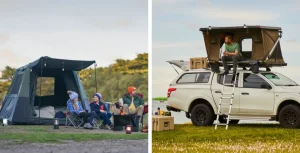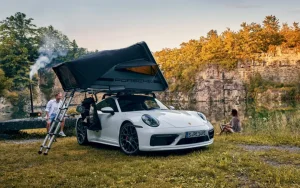
As outdoor camping gradually evolves from “wilderness survival” to “exquisite lifestyle”, the matter of “how to live” is becoming more and more delicate. Some people drive an SUV, lift the roof, and build a small nest in the air in a few minutes; while others prefer to drive a trailer with a kitchen and a toilet, and “move their home to the mountains” all the way in style.
If you’re torn between trailer camper vs roof tent camping, don’t worry, we’ll help you break down the advantages, limitations and suitability of each. Should you choose the “roof-top tent school” or the “RV comfort school” for enjoying life with a light load? The following duel may decide what your next vacation will be like.
What is a trailer camper?
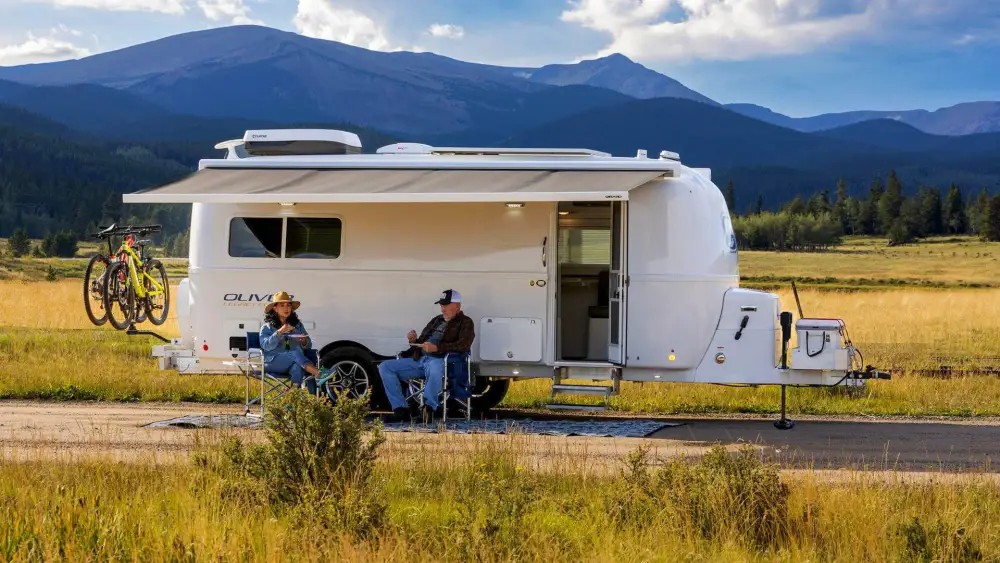
A trailer camper (Travel Trailer) is the “five-star mobile suite” of the camping world. Instead of a self-propelled RV with its own engine, it needs to be towed by an SUV or pickup truck. You can think of it as a “capsule villa” without a front end: it has everything you need, including beds, a kitchen, a sink, a refrigerator, a sofa, air conditioning, a toilet, a shower, and even a microwave oven and an entertainment system, and some of the deluxe models are even equipped with solar power generation and a slide-out expansion space.
This “take your home with you” model is perfect for long stays at the campground for a cozy, comfortable camping experience. You can make coffee by Yellowstone or soak your feet in the Grand Canyon, perfect for those who like to “vacation camp”.
However, its disadvantages are also obvious: you need a car with towing ability, and the towing skills must be online, or else the turns, reversing, and going uphill may make your heart beat faster. At the same time, not all campgrounds are suitable for towable RVs to drive into, and some narrow and rugged forest roads or remote beaches may say bye-bye to your RV.
What is Roof Top Tent Camping?
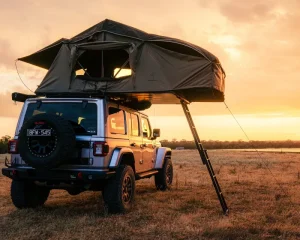
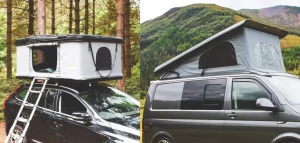
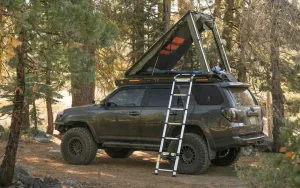
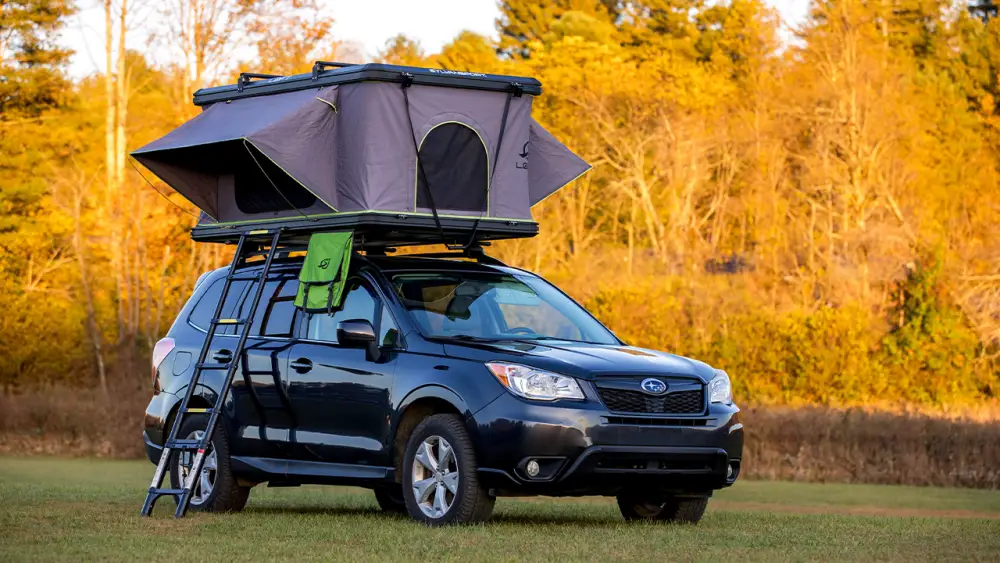
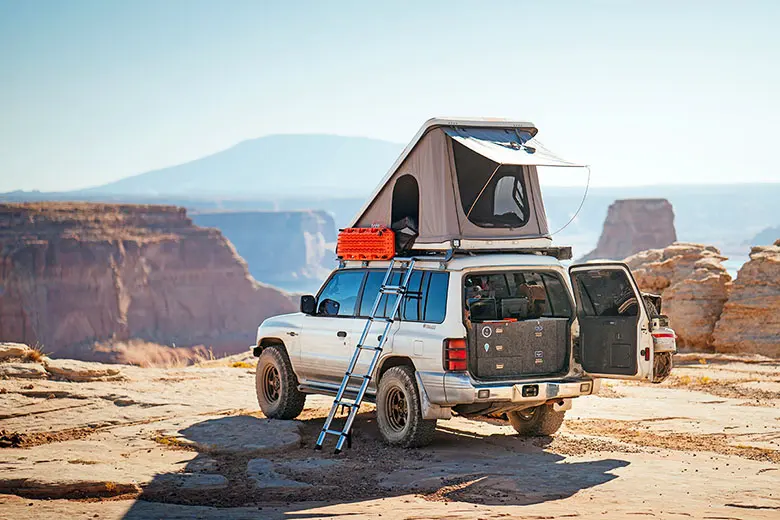
Rooftop Tent is a popular “lightweight camping black technology” in recent years. It does not take up space in the car, usually installed on the roof of the SUV, crossover or pickup truck, after unfolding it is a “bed in the air” that can sleep 2-3 people. Some are even equipped with stairs, mattresses, sunroofs, LED lights, some high-end models have a hard shell shell automatically open and close, a key to unfold the whole hydraulic.
The biggest advantage of the roof tent is “ready to go”: Friday off work, pack two bags of snacks and sleeping bags, get on the car and go straight to the camp; to the place after three minutes to open the tent, two minutes to set up a good bed, you can look up at the stars, completely unbeatable to live in the hotel.
The best thing is that it is not limited by the terrain – you can park on the mountain, lake, coast, desert or even city corners, without having to look for flat land, not afraid of stagnant water, insects and ants, and can also be quickly evacuated. It is synonymous with freedom for those who like to explore, have high mobility, and do not like the “rules and regulations” of camping.
Of course, car roof tents also have shortcomings. It is not suitable for people who are physically weak or have limited mobility (after all, you have to climb up and down), and there are no bathroom and kitchen facilities, so if you camp for more than 2 days, you may miss the hot water and toilet at home.
Trailer Camper vs Roof Top Tent: A Comprehensive Comparison
Trailer Campers and Roof Top Tents may seem like two completely different camping experiences—one is a cozy “tiny home on wheels,” while the other is a nimble “tent in the sky.” But which one suits your travel style better?
Before jumping to conclusions, take a look at this side-by-side comparison. We’ve laid out the key differences in price, comfort, ease of setup, practicality, and more—so you can clearly see the pros and cons of each option.
Comparison Table
Comparison Items | Trailer Camper | Roof Top Tent |
Price Range | Medium to High: $15,000–$100,000+ (depending on configuration) | Low to Medium: $1,000–$5,000 (depending on brand and type) |
Driving Experience | Higher skill requirement; needs towing experience | Easy driving with no towing; flexible and nimble |
Build & Stow | Ready to use immediately at the campground; no setup required | Requires manual setup and packing; takes around 5–10 minutes |
Comfort | Offers home-like comfort; suitable for all seasons | Comes with mattress; warmth and comfort depend on weather conditions |
Storage Capacity | Ample storage in cabinets and exterior bins; ideal for long-term camping | Relies on car interior space; best for minimalist or short trips |
Climate Adaptation | Equipped with AC, heating, and strong insulation | Well-ventilated but less effective in extreme temperatures |
Bathroom Convenience | Includes built-in toilets and showers | Usually requires using campground facilities or portable gear |
Wilderness Adaptation | Needs flat, open areas; limited access in off-road terrain | Ideal for rugged terrain, off-road, and remote adventures |
Capacity | Great for families and small groups | Perfect for couples or 1–2 people |
Maintenance & Storage | Requires large parking and regular upkeep | Easy to store; minimal maintenance required |
Trailer Camper vs Roof Top Tent Which camping option is right for you?
If you’re thinking about investing in one of these camping options, it’s worth asking yourself a few questions first:
Trailer campers are better suited for:
People on a budget who like a cozy experience: do you want hot showers, dry beds, and nightly movies? A trailer camper can almost replicate the feeling of home.
Long-term campers or interstate travelers: If you’re planning a 10+ day traverse, an RV makes it easy to face all kinds of weather and terrain.
Families with small children or pets traveling with them: more space means more freedom for kids to play and cozy corners for pets.
Those who don’t care about parking and towing skills: If you’re good at driving a big car and aren’t afraid of backing into a garage, it’s the perfect choice.
Car-top tent camping is better for:
Light travelers who love adventure and quick turnarounds: you can sleep on top of a highland mountain in the wee hours of the morning and leave for another lake in the early morning.
Those who are on a budget but want to experience camping: with just a tent and a roof rack, you can have your own “airbnb”.
For those who hate big equipment and cumbersome storage: say goodbye to heavy equipment and go without any burden.
Photographers, outdoor players, minimalist travelers: roof tents take up almost no space, allowing you to pack more photography equipment, fishing gear and other equipment.
Towable campers: how to choose wisely?
Check your towing capacity: every vehicle has a towing limit, so choosing the wrong weight could mean scrapping your engine.
Check campground compatibility: some campgrounds don’t accept large motorhomes, so check your reservations in advance.
Prefer “light + double axle” trailers: they are more stable, easier to maneuver and less likely to rear-end.
Install a reversing system: especially for beginners, to avoid “dumping the house into a tree”.
Roof tents: how to use them comfortably?
Don’t ignore the roof load limit: each car has dynamic (while driving) and static (while parked) load standards, don’t overload.
Choose a high-density foam mattress + a waterproof kit: improve the quality of your sleep without fear of moisture.
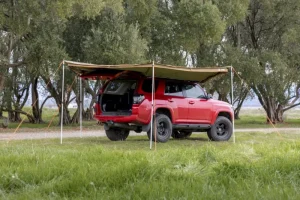
Match with an awning / side tent: create a temporary living room, shelter from the wind, rain and cooking.
Use a portable toilet or folding washroom: you can have a decent toilet and wash in the field.
Summary
trailer campers and roof tents are not higher or lower, they are like two philosophies of life in the camping world –
one is “I take everything with me”, the other is “I can stop at any time”. The other is “I can stop anytime”.
If you are looking for comfort, support and a sense of ceremony, then choose caravan-style camping;
If you are keen on flexibility, lightness and exploring the unknown, then a car roof tent may be more to your liking.
Whichever you choose, as long as you are on the road to nature, you are already closer to freedom than 99% of people.