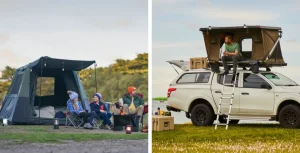
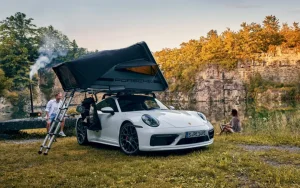
With the rise of outdoor camping culture, more travelers are focusing on the selection of mobile accommodation tools. Among the many options, rooftop tents and pop-up campers have become two popular choices. Both offer convenience, flexibility, and the ability to escape traditional campsite restrictions, but they differ in functionality, cost, space, and more.
This article aims to provide a clear understanding of the definitions, features, and target users of these two types of gear from a professional perspective, along with practical selection advice to enhance your next camping experience, making it more comfortable, safe, and efficient.
What is a Rooftop Tent?
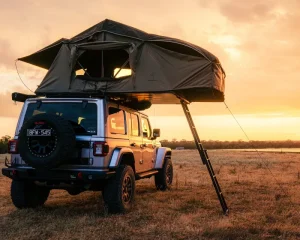
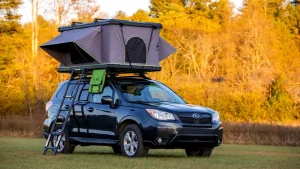
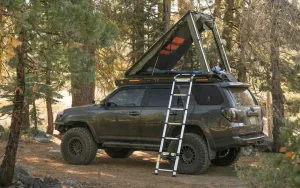
A rooftop tent is a tent structure that can be installed on the roof of a vehicle (SUVs, off-road vehicles, small trucks, etc.). It unfolds manually or hydraulically during camping, providing an elevated sleeping space. Rooftop tents are mainly divided into:
- Soft-shell Rooftop Tents: Fabric cover + folding frame, lightweight and budget-friendly.
- Hard-shell Rooftop Tents: Rigid top and bottom shells, quick to set up, excellent rain and wind resistance.
✅ Advantages:
- Does not occupy ground campsite space; adapts to complex terrains (mountains, grasslands, deserts).
- Good ventilation; excellent moisture and insect resistance.
- Easy to install; setup and takedown typically take 3-5 minutes.
- Relatively economical, suitable for novice or light campers.
What is a Pop-up Camper?
A pop-up camper is a towable camping trailer with a foldable roof or side structure. It is compact while driving, but can expand into a larger space upon reaching the campsite, usually equipped with a bed, small kitchen, lighting, and electrical systems.
✅ Advantages:
- Offers a near “mobile home” living experience, providing shelter from wind and rain.
- More internal living space and storage options.
- Some models support air conditioning, heaters, and bathrooms.
- Suitable for medium to long family camping trips or outings with children.
Comparative Analysis: Rooftop Tent vs. Pop-up Camper
Feature | Rooftop Tent | Pop-up Camper |
Price Range | $800–$3,000 | $5,000–$20,000+ |
Unfolded Space | Accommodates 2-3 people for sleep | Can house 3-6 people for living |
Comfort Level | Basic, suitable for short camping | High, suitable for long family trips |
Setup Time | Quick, about 3-5 minutes | Moderate, about 10-20 minutes |
Storage & Features | No extra storage, sleep only | Includes kitchen, electricity, furniture, etc. |
Road Adaptability | Flexible, suitable for off-road/non-paved roads | Towable, not suitable for extreme terrains |
Maintenance & Care | Simple, mainly waterproof checks | Complex systems, higher maintenance costs |
Vehicle Dependency | Installed on roof, height and weight limits | Towable, flexible vehicle choices |
Which One is Right for You? — Selection Recommendations
Choosing between these camping methods depends on your travel habits, budget, and frequency of camping. Here are suggestions for different user needs:
✅ Choose a Rooftop Tent if:
- You have a limited budget and want to experience camping without a heavy investment.
- You enjoy short road trips and weekend camping activities.
- You require some off-road capability and wish to traverse various terrains freely.
- You do not want to carry a large towable device.
✅ Choose a Pop-up Camper if:
- You prefer family outings and have higher space and comfort requirements.
- You plan longer trips with a more fixed camping route.
- You want basic living facilities like a kitchen, lighting, and water supply.
- You have towing experience or are willing to invest more to create a “mobile home.”
Comprehensive Advice: Beginners Keep It Simple, Experienced Campers Can Upgrade
If you are new to camping or have a limited budget, selecting a quality rooftop tent to pair with your existing vehicle is an ideal way to quickly enter the camping experience. For those who are accustomed to outdoor living and wish to achieve a “home on wheels” travel mode, investing in a pop-up camper will provide a more comfortable and comprehensive experience.
Regardless of your choice, paying attention to the product’s material, space layout, brand reputation, and after-sales service is essential before purchasing. Ensuring the equipment is safe, secure, and waterproof is the basic premise for safe camping.
Conclusion
Rooftop tents and pop-up campers represent two camping lifestyles: lightweight flexibility versus comprehensive comfort. In an era where “motorhomes aren’t necessarily heavy, and tents aren’t necessarily simple,” flexible configurations and tailored choices are key. We hope this article helps you find the mobile home that truly suits you, allowing you to embark on a free and exciting outdoor journey.
If you are considering acquiring a practical and reliable rooftop tent, feel free to contact 171Outdoor‘s consulting staff for more information on vehicle compatibility, configuration parameters, and real-life cases. Our professional team will provide you with one-on-one consultation services, helping you easily start your free and exciting outdoor adventure!