Introduce
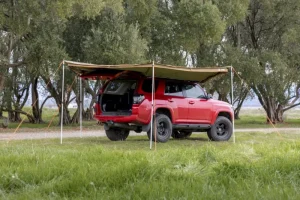
Prolonged exposure of your car under the hot sun not only accelerates the deterioration of the interior and raises the temperature inside the car, but also may damage the paint. Car awnings are an important tool to protect your vehicle from UV radiation, high temperatures and inclement weather.
However, choosing the right awning material is not an easy task, as there are significant differences in durability, insulation, and cost among different materials. This article will take an in-depth look at the best materials for car awnings, citing authoritative data and expert advice to help you make an informed choice.
Common car awning materials on the market
When choosing a car awning, it is crucial to understand the characteristics of different materials. Here are some of the most common materials on the market and their advantages and disadvantages:
· Polyester
Polyester is a widely used awning material, favored for its good abrasion resistance and UV resistance. According to the American Society for Testing and Materials (ASTM International), the UV resistance of high-quality polyester fiber can reach more than 95%, which can effectively reduce the temperature rise inside the car.
·PVC coated fabrics
PVC coated fabrics are known for their excellent water resistance and durability. This material is commonly used in outdoor shade products, and its lifespan is usually 5 to 10 years. However, PVC can contain traces of hazardous substances and is controversial in terms of environmental protection.
·Polypropylene (Polypropylene)
Lightweight and corrosion-resistant, polypropylene is ideal for car awnings that need to be moved frequently. According to Plastics Technology magazine, polypropylene has excellent heat resistance and can withstand temperatures of up to 130°C without deformation.
· Fiberglass Reinforced Plastics (FRP)
FRP material combines the advantages of fiberglass and resin to provide high strength and excellent thermal insulation. Although more expensive, it has a service life of over 15 years, making it ideal for long-term use.
· Aluminum Foil Composite Material
Aluminum foil composites consist of a layer of aluminum foil and a polyethylene film, providing excellent reflectivity and insulation. According to test data from the U.S. Department of Energy (DOE), this material can reduce the absorption of heat from the sun to less than 20%, significantly reducing the rise in temperature inside the car.
How to choose the best material?
Thermal insulation
One of the main functions of car awnings is to reduce the temperature inside the car. According to a study by the Royal Meteorological Society, the temperature inside a car in direct summer sunlight can be as high as 70°C. It is therefore particularly important to choose a material with good insulation properties. U.S. Department of Energy (DOE): “The use of efficient insulation materials can reduce the energy consumption of automotive air conditioning systems by up to 40%, thereby reducing fuel consumption and carbon emissions.”
- Recommended materials: aluminum foil composite and polyester fiber.
○Aluminum foil composite material: with a reflectivity of up to 90%, it effectively blocks solar heat radiation.
○Polyester fiber: excellent UV resistance and reduces interior temperature rise by about 25%.
Durability
Awnings need to withstand the elements and all weather conditions, so the durability of the material should not be overlooked. According to tests conducted by the German Quality Control Association (TÜV), FRP and PVC-coated fabrics excel in terms of durability, with a service life of up to 15 and 10 years respectively.
- recommended materials: FRP and PVC-coated fabrics.
○FRP: High strength and aging resistance make it ideal for long-term investments.
○PVC coated fabric: superior waterproof performance, suitable for rainy areas.
Environmental friendliness
With the increasing global concern for environmental protection, the environmental performance of car awning materials has become an important consideration. According to the international Oeko-Tex Standard 100, polypropylene and recycled polyester fibers are rated as environmentally friendly because of their recyclability and low pollution characteristics.
- recommended materials: polypropylene and recycled polyester fibers.
o Polypropylene: lightweight and easy to recycle, in line with the concept of sustainability.
o Recycled polyester fiber: made from used plastic bottles, it is both environmentally friendly and economical.
Cost Effectiveness
Budget constraints are often an important factor in consumers’ choice of car awning material. According to market research firm Statista, the price range for different materials is as follows:
- Polyester: $10 to $20 per square meter.
- PVC coated fabric: $20 to $40 per square meter.
- FRP: $50 to $80 per square meter.
- Aluminum foil composite: $30 to $50 per square meter.
Taking performance and price into account, polyester fiber and aluminum foil composites are usually the more cost-effective options.
Analysis of practical application scenarios
Different scenarios have different needs for car awning materials, the following are some suggestions:
- Family use: polyester fiber or aluminum foil composite materials are recommended, which are cost-effective and easy to install.
- Commercial use: such as parking lots or logistics centers, FRP or PVC coated fabrics are recommended to ensure long-term durability.
- Environmental advocates: Prefer polypropylene or recycled polyester fiber materials to support sustainable development.
Summary
Choosing the best material for automotive car awnings requires a combination of insulation, durability, environmental friendliness and cost-effectiveness. Based on available research and data, the following materials perform particularly well:
- Short-term use: polyester fiber and aluminum foil composites are economical and effective.
- Long-term investment: FRP and PVC-coated fabrics, durable and suitable for a wide range of environments.
- Eco-first: polypropylene and recycled polyester fibers, in line with the concept of sustainability.
Whatever your needs are, the 171Outdoor brand has the right solution for you. We are a company that specializes in making roof tents and car tents. If you would like to know more about awning materials, please feel free to contact our professional team and we will be happy to assist you.