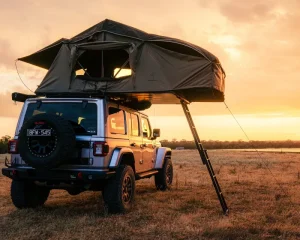
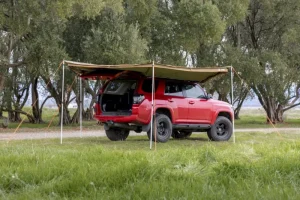
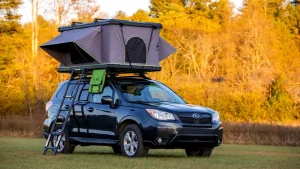
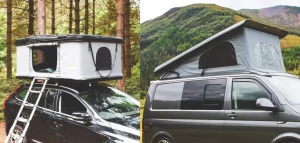
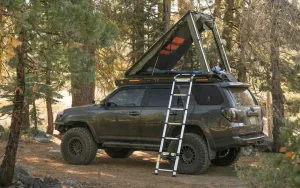
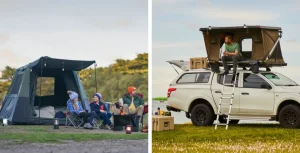
For outdoor enthusiasts who love nature and pursue freedom, Roof Top Tents (RTT) have become indispensable equipment. They perfectly blend convenience, comfort, and adventurous spirit, allowing you to set up camp anywhere you desire. However, with many types of rooftop tent available in the market, making the right choice can be challenging. This article will delve into the types, differences, characteristics, and suitable outdoor environments of roof tents, helping you choose the most suitable one for yourself.

The Main Types and Differences of Rooftop Tent
According to structural design and usage functions, common rooftop tents on the market are mainly divided into the following types:
1. Hard Shell Roof Tent
Features:Made of sturdy shell materials such as aluminum alloy or high-strength plastic, with excellent waterproof and windproof performance. Usually equipped with an automatic opening and closing system, making operation simple and fast.
Advantages:Stable installation, strong durability, and good insulation effect. Suitable for long-term fixation on vehicles without frequent disassembly and assembly.
Disadvantages:Relatively heavy with certain requirements for the load-bearing capacity of the vehicle; the price is generally higher.
2. Soft Shell Roof Tent
Features:Made mainly of lightweight fabric, unfolded through an air pump or manual inflation method. After folding, it has a small volume and is easy to carry and transport.
Advantages:Lightweight, low cost, and easy to store. Can be loaded and unloaded at any time, providing high flexibility.
Disadvantages:Protective performance is not as good as the hard shell version, requiring attention to moisture-proof treatment; the service life may be shorter.
3. Hybrid Roof Tent
Features:Combines the advantages of both hard and soft shells, with some frames made of rigid materials and the rest made of flexible fabrics. It maintains a certain level of strength while also considering portability.
Advantages:Balanced comprehensive performance and high cost-effectiveness, suitable for use in various terrain conditions.
Disadvantages:Complex design may increase the failure rate and make maintenance difficult.
Characteristics of Different Types of Roof Tents
After understanding the basic classifications, we will now analyze in detail the uniqueness of each type so that you can better evaluate which one best meets your needs.
1. Hard Shell Roof Tent
Structural Stability:Due to the use of a box structure made of all metal or composite materials, the hard shell rooftop tent can withstand greater external impacts and is not easily deformed or damaged.
Residential Comfort:The interior space is spacious and bright, equipped with a complete ventilation system and mattress facilities, ensuring good rest quality even in cold and humid environments.
Security Protection:In addition to the basic waterproof and windproof features, many high-end models also include anti-theft locks and emergency escape devices to ensure the safety of users at night.
2. Soft Shell Roof Tent
Convenience:The construction process can be easily completed without the need for additional tools, making it particularly suitable for short-term travel or temporary camping occasions.
Economical:Compared to the other two products, the price of the soft shell roof tent is more affordable, making it very suitable for novice campers with limited budgets who want to try this new camping method.
Lightweight Design:The entire device is lightweight and does not impose too much burden on the car, while also making it easy to move between different locations.
3. Hybrid Roof Tent
Multi-Functional Adaptability:The tent shape can be adjusted according to actual needs, which can be used as a conventional “roof” or converted into a regular tent for ground use, meeting diverse camping needs.
Personalized Customization:Allows users to add different accessories according to their personal preferences, such as sunshades, storage bags, etc., further enhancing the user experience.
Reasonable Price Range:Although the overall cost is higher than that of soft shell tents, it is lower than that of hard shell tents, finding a reasonable balance between performance and cost.
Outdoor Environments Suitable for Roof Tents
To help you better understand which type of rooftop tent is more suitable for specific camping environments, here are several typical outdoor scenarios and their recommended configurations:
1. High Mountain Hiking and Camping
- Recommended Type: Hard Shell Roof Tent
- Reason: The temperature in high-altitude areas changes violently and is often accompanied by severe storms and rain. A strong and reliable shelter is essential to withstand these challenges. Additionally, the long trek makes it crucial to quickly set up camp, and the hard shell roof tent can perfectly meet this demand.
2. Beach Vacation Camping
- Recommended Type: Soft Shell Rooftop Tent
- Reason: The environment on the beach is relatively mild, without too many complex terrain obstacles, and the weather is usually sunny and warm. A lightweight and portable soft shell roof tent is particularly suitable in this scenario. The soft fabric material also helps reduce the possibility of sand particles entering the interior of the tent.
3. Forest Exploration Camping
- Recommended Type: Hybrid Roof Tent
- Reason: The dense vegetation in forests creates dim and humid conditions, with various unforeseeable situations such as falling branches or wild animals approaching. In such uncertain environments, a hybrid roof tent that provides sufficient protection and can flexibly respond to unexpected situations is undoubtedly the best choice.
4. Short Distance Camping Around the City
- Recommended Type: Soft Shell or Hybrid Roof Tent
- Reason: For urban residents planning short-term outdoor activities, bulky and expensive hard shell rooftop tents are clearly not practical. Lightweight and easy-to-use soft shell or hybrid tents can better adapt to simple and casual needs while being easier to integrate into daily life.
How to Choose a Roof Tent That Suits You
Finally, after determining the ideal car model, consider the following key factors to ensure that your final choice is correct:
1. Vehicle Compatibility
Confirm whether the selected roof tent is suitable for your vehicle model and check if its maximum load-bearing capacity meets the requirements. If necessary, consult professionals or refer to official documentation.
2. Seasonal Adaptability
Choose styles based on the planned camping time. For summer, prioritize products with good ventilation and heat dissipation functions. In winter, focus on options that provide warmth.
3. Personal Preference
Beyond functionality, details like appearance and color are equally important. This will be the little nest accompanying you on wonderful journeys, so take your time selecting one you love!
4. Size and Capacity
Consider the size of your camping team and individual space requirements. Ensure there is enough space inside the tent for comfort and for storing equipment. Generally, a two-person tent suits couples or solo travelers, while larger families need tents with a capacity of three or more.
5. Installation Method
Different roof tents have different installation methods. Some require professional tools and skills, while others can be easily installed. Choose a tent installation method that suits your vehicle and personal abilities, considering convenience for installation and disassembly.
6. Weight and Portability
If your vehicle has limited carrying capacity or you need to travel long distances, weight and portability are important. Hard shell tents are usually heavier but more durable, while soft shell tents are relatively lightweight and easy to carry.
7. Budget
The price range for roof tents varies widely, from a few hundred dollars to thousands. Determine your budget before purchasing, then search for the most suitable product within that range. Remember, a high price doesn’t always mean better quality; consider performance and characteristics comprehensively.
Conclusion
In summary, whether you are an experienced hiker or a novice venturing into the wilderness for the first time, choosing a suitable rooftop tent will add countless fun and security to your camping journey. I hope this article provides valuable reference information to help you find the ideal choice that truly belongs to you.