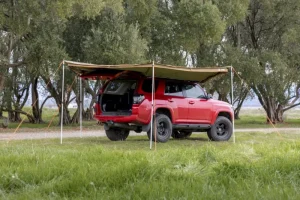
In the world of outdoor exploration and camping, rooftop tents are becoming increasingly popular because they are convenient and offer a unique experience. You may have heard of hard shell roof tents vs soft shell roof tents, which have many differences in design, functionality, and user experience.
If you are planning to buy a rooftop tent, it would be helpful to understand the differences between these two types. This article will compare hard shell and soft shell roof tents from multiple perspectives, making it easy for you to make a choice.
Structural DesignHard Shell vs Soft Shell Rooftop Tents
Hard Shell Roof Tent
Hard shell roof tents usually use an integrated hard shell, typically made of lightweight but sturdy materials such as aluminum alloy or fiber-reinforced plastic. This structure allows the tent to be tightly closed when not in use, creating a roof luggage appearance. When opened, hard shell roof tents are mostly assisted by hydraulic rods or gas springs, enabling quick unfolding and a relatively simple construction process, usually completed by a single person in a few minutes. The internal frame structure is stable, with high-end models offering integrated mattresses and ventilation systems for a comfortable sleeping environment.
Soft Shell Roof Tent
Soft shell roof tents use flexible canvas or nylon materials as the main body, paired with metal or plastic frames. In the folded state, the soft shell tent is relatively compact and lightweight. When unfolding, the tent must be manually pulled out of the storage position on the roof and the frame set up, which can be a complex process requiring two people and taking a longer time to complete. However, once unfolded, the soft shell tent offers high flexibility in its internal space, allowing adjustments to meet different usage needs.
| Comparison Item | Hard Shell Rooftop Tent | Soft Shell Rooftop Tent |
|---|---|---|
| Outer Shell Material | Aluminum alloy, fiberglass-reinforced plastic | Canvas, nylon |
| Deployment Method | Assisted by hydraulic rods or gas springs | Manually pulled out and frame set up |
| Setup Difficulty | Can be quickly completed by one person | Typically requires two people, takes longer |
| Internal Structure Stability | High, robust frame structure | Relatively low, high flexibility |

Comparison of Waterproof Performance
Hard Shell Roof Tent
The hard shell roof tent has a natural advantage in waterproofing due to its integrated hard shell design. Gaps between the shells are treated with sealing strips or welding processes, effectively blocking rainwater intrusion. The top is generally curved, allowing rainwater to quickly slide down and reducing the risk of accumulation. Even in rainstorms, the hard roof tent can provide reliable rain protection.
Soft Shell Roof Tent
The waterproof performance of soft shell roof tents depends on the fabric used and the waterproof treatment at the joints. High-quality soft shell tents are made of canvas or nylon with waterproof coatings and sealed joints. However, due to the numerous folding and splicing areas after deployment, their waterproof performance may decline over time or with frequent use. In extreme rainstorm conditions, soft shell tents may experience slight water seepage.
| Comparison Item | Hard Shell Rooftop Tent | Soft Shell Rooftop Tent |
|---|---|---|
| Waterproof Principle | Integrated shell, sealing strips or welding techniques | Waterproof fabric and sealing strips at seams |
| Waterproof Performance Stability | High, not easily affected by usage frequency | Relatively low, may decline with usage frequency |
| Ability to Handle Extreme Rain | Strong, effectively blocks rain | May experience slight leakage |
Thermal Insulation Effect
Hard Shell Roof Tent
The hard shell structure makes it excellent for warmth and insulation. Hard materials have thermal insulation properties, reducing external temperature impact. Some hard shell roof tents are equipped with insulation layers, enhancing warmth. On cold nights, they effectively maintain internal warmth for a comfortable sleep.
Soft Shell Roof Tent
The insulation effect of soft shell roof tents is relatively weak. While the fabric has some thermal insulation properties, its thinner structure and ventilation openings allow external temperatures to affect the interior. In cold weather, soft shell tents may need additional insulation, such as thick sleeping bags. However, they offer good breathability in hot weather, keeping the interior cool.
| Comparison Item | Hard Shell Rooftop Tent | Soft Shell Rooftop Tent |
|---|---|---|
| Insulation Principle | Hard outer shell and insulation layer | Fabric insulation |
| Insulation Effect | Good, effectively retains internal warmth | Relatively weak, requires additional warming measures |
| Thermal Performance | Good, reduces external temperature impact | Relatively weak, external temperature easily affects interior |
Weight and Installation Convenience
Hard Shell Roof Tent
Hard shell roof tents typically weigh around 50-100 kilograms due to their hard outer shell and complex structure, requiring vehicles with strong load-bearing capacity and suitable roof racks. Professional installation tools and accessories are necessary to ensure the tent is firmly fixed. Once installed, the hard shell roof tent can remain on the roof for a long time without frequent disassembly.
Soft Shell Roof Tent
Soft shell roof tents are relatively lightweight, usually between 20-50 kilograms, with lower load-bearing requirements. Installation is straightforward and typically only requires basic tools. The soft shell tent can be easily disassembled when not in use, saving roof space.
| Comparison Item | Hard Shell Rooftop Tent | Soft Shell Rooftop Tent |
|---|---|---|
| Weight | Approximately 50-100 kg | Between 20-50 kg |
| Vehicle Carrying Requirement | High, requires strong carrying capacity and suitable roof rack | Low, standard roof rack is sufficient |
| Installation Difficulty | Complex, requires specialized tools | Relatively simple, basic tools sufficient |
| Disassembly Convenience | Not convenient for frequent disassembly | Easy to disassemble, saves roof space |
Price and Cost-Effectiveness Analysis
Hard Shell Roof Tent
Hard shell roof tents are usually priced higher due to advanced design, high-quality materials, and manufacturing processes. Their price ranges from 3000 to 10000 yuan, with high-end models exceeding 10000 yuan. Although expensive, their durability and stability provide long-term value. For users seeking a high-quality camping experience, the cost-effectiveness remains relatively high.
Soft Shell Roof Tent
Soft shell roof tents are more affordable, typically between 1000-5000 yuan. This lower price makes them more accessible, especially for users with limited budgets or occasional camping needs. However, their relatively weaker durability may impact long-term cost-effectiveness compared to hard shell tents.
| Comparison Item | Hard Shell Rooftop Tent | Soft Shell Rooftop Tent |
|---|---|---|
| Price Range | 3000 – 10000 yuan, high-end over 10000 yuan | 1000 – 5000 yuan |
| Durability | High, not easily damaged over long-term use | Relatively low, prone to wear and aging |
| Cost-Effectiveness (Long-Term Use) | High, stable and durable performance | Relatively low, needs more frequent replacement |
| Cost-Effectiveness (Short-Term or Occasional Use) | Relatively low, higher price | High, affordable for occasional needs |
Applicable Scenarios and User Demand Analysis
Hard Shell Roof Tent Applicable Scenarios
Long Distance Off-Road Exploration: The sturdy structure and excellent waterproof and thermal performance make hard shell roof tents ideal for long-distance off-road adventures. They provide reliable shelter in harsh road and weather conditions.
Camping in Cold Regions: Their insulation properties make hard shell tents advantageous in cold areas, keeping users warm and comfortable in mountainous or northern winter conditions.
Pursuing High-Quality Camping Experience: For users focused on sleep quality and overall camping experience, the convenient setup, stable structure, and comfortable internal facilities of hard shell tents meet their needs.
Soft Shell Roof Tent Applicable Scenarios
Short Distance Self-Driving Tour: Lightweight and easy to install, soft shell tents are perfect for short trips. They can be easily set up and removed, providing a simple accommodation solution for weekend getaways.
Camping in Warm Climate Areas: The breathability of soft shell tents keeps users cool in warm conditions. Their flexibility is suitable for relaxed camping environments.
Users with Limited Budget: Soft shell tents are an affordable choice for budget-conscious users wanting to experience rooftop camping, meeting basic needs despite less performance than hard shell options.
Summary
Hard shell vs soft shell rooftop tents each have their own advantages and disadvantages. When choosing, it’s essential to consider individual needs, budget, and usage scenarios. If you frequently engage in long-distance off-road adventures, have high performance and stability requirements, and a sufficient budget, a hard shell roof tent is the better choice.
Conversely, if you only occasionally take short self-driving trips and value lightweight and affordability, a soft shell roof tent may be more suitable. This detailed analysis aims to help you make the right decision between hard shell and soft shell roof tents, ensuring your outdoor camping trip is enjoyable and comfortable.