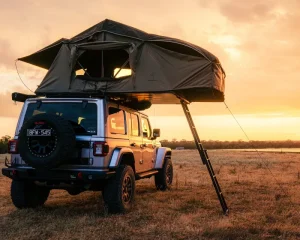
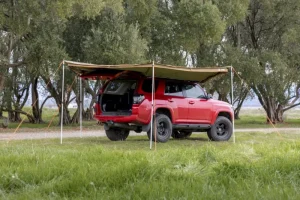
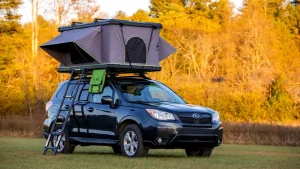
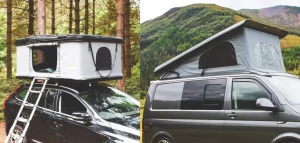
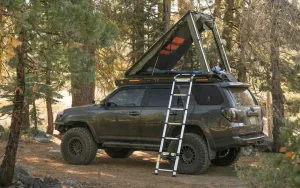
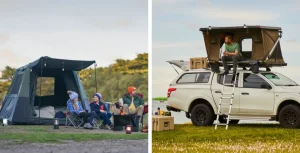
For centuries, humans have continued to explore new ways to connect with nature. From our ancient tree-dwelling ancestors to modern rooftop tent enthusiasts, our quest to sleep under the stars continues to evolve. This ultimate 2,300-word guide takes you on a comprehensive tour of the rooftop tent (RTT) world and breaks down the key safety, fit, and lifestyle elements.
Why Rooftop Tents Are Reinventing Outdoor Adventure
RTTs offer revolutionary advantages over traditional tents:
✔️ Far from ground moisture and wildlife
✔️ Fast setup (5-10 minutes on average vs. 20+ minutes for high-end ground tents)
✔️ All-terrain adaptation (parking lots, rocky ground, uneven surfaces)
✔️ Comes standard with a 2-4 inch memory foam mattress
✔️ 360-degree panoramic views to realize the “Treehouse Fantasy”
Outdoor Industry Association 2023 data shows RTT annual sales growth of 28%, benefiting from design improvements and the rise of Vanlife culture.
Core Decision-Making Element: Finding Your Perfect Partner
Vehicle Suitability: The Foundation of Safety
Table of Key Parameters
Element | Requirement | Source |
Dynamic Load Capacity | ≥ tent weight + 20% margin | Vehicle handbook / luggage rack instructions |
Static Load Capacity | ≥ (tent weight + occupants) x 1.5 | Product data/vehicle description |
Luggage Rack Type | Specialized RTT model (e.g., Thule HD) | Manufacturer’s website |
Professional Advice:
- Crossovers need to be modified with luggage racks (Yakima/Thule recommended).
- Trucks/SUVs can use stock racks (need to verify load capacity).
- Electric vehicles need to consider battery impact.
Tent Types: Match Your Adventure Style
A. Softshell Folding (65% of the Market)
- Good for: Weekend travelers, mild climates
- Benefits: Affordable price ($800-$2000), lightweight (50-68kg)
- Cons: Weak insulation, needs to be fully deployed
B. Hard-shell Pop-ups (High-End Choice)
- Ideal for: High-frequency use, extreme weather
- Advantages: 60 seconds to open, excellent water resistance
- Disadvantages: Higher price ($2500-$5000), heavier (73-100kg)
C. Hybrid Truck Bed Tents (Emerging Trend)
- Innovation: Adaptable to pickup truck cargo box / SUV tailgate
- Advantage: Maintains vehicle mobility while pitching
Weather Protection: Beyond Basic Waterproofing
Key Certification:
- Water Pressure Index: ≥3000mm (storm protection)
- UV Resistance: 500+ hours (desert essential)
- Wind Resistant Structure: Aerospace Aluminum vs. Fiberglass
- Insulation Kit: Supports sub-zero camping
Case in Point: iKamper Skycamp 3X withstands 55mph winds with aerospace aluminum construction.
Life Fit: Hidden Costs
Element | Impact | Solution |
Fuel Consumption | Increase of 5-15% | Choice of aerodynamic hard shells |
Daily Driving | Height limit issues | Retractable ladder design |
Storage | Folded 114-152cm length | Garage space planning |
Real Life Example: Subaru Outback owners test 12% increase in highway fuel consumption.
Professional Installation Guide
Step 1: Weight Distribution
- Use weight distribution poles
- Align the center of the tent with the axle
- 60/40 front/rear weight distribution ratio
Step 2: Secure Fixing
- Use the original brackets
- Torque bolts to 12-15 Nm
- Add an anti-theft system (e.g., LockNLoad)
Step 3: Pre-trip Inspection
- Home pre-build test
- Bolt tightening review
- Insurance confirmation
- Planning a limited-height route
Maintenance Protocol: Extending Service Life
Seasonal Maintenance Guide
- Spring: Waterproofing (Nikwax recommended)
- Summer: Dry lubrication of zippers
- Autumn: Check seams for mold
- Winter: Vertical storage + desiccant
Empirical Evidence: Tepui users use UV protectant every month, life expectancy over 5 years.
Cost Analysis: 5-Year Hold Comparison
Expense Item | Softshells | Hardshells |
Initial Cost | $1500 | $3200 |
Oil Cost Impact | $600 | $400 |
Maintenance Costs | $200 | $150 |
Total Cost | $2300 | $3750 |
(Based on 10 camping trips and 15,000 miles traveled per year)
Model Recommendation Guide
Compact (Subaru Crosstrek)
- Tent: Smittybilt Overlander (58kg)
- Frame: Thule WingBar Evo
Full-Size Pickup (Ford F-150)
- Tent: Roofnest Condor XL
- Frame: Stock HD Frame
Off-Road (Jeep Wrangler)
- Tent: James Baroud Evolution
- Frame: Front Runner Slimline II
Future Trends
- Integrated solar panels
- AI temperature control system
- Graphene composite material
- Automatic unfolding mechanism
Final Purchase List
✓ Verification of the vehicle’s ultimate load-bearing capacity
✓ Hands-on testing
✓ Compare 3+ brands
✓ Calculate total cost of ownership
✓ Plan storage options
2.3 million RTT users in North America have already enhanced their outdoor experience through science-based choices. Remember: the best rooftop tent may not be the most expensive, but the one that perfectly fits your vehicle, lifestyle, and adventure goals.
FAQs About rooftop tent
- Can I put a roof tent on my car?
Yes, most vehicles can support a rooftop tent if they have a suitable roof rack with the right weight capacity. Check your vehicle’s roof load limit and install a strong roof rack before mounting a tent. - Can my car support a rooftop tent?
Check your car’s dynamic and static weight limits in the owner’s manual. Ensure your roof rack can handle the tent’s weight and the additional load of occupants while parked. - How to lift a rooftop tent onto a car?
Use at least two people to lift the tent safely, or use a hoist system if available. Position the tent on the roof rack, align it properly, and secure it with the provided mounting brackets.